Our Work in Green Bay
Projects in Green Bay
View Full Gallery →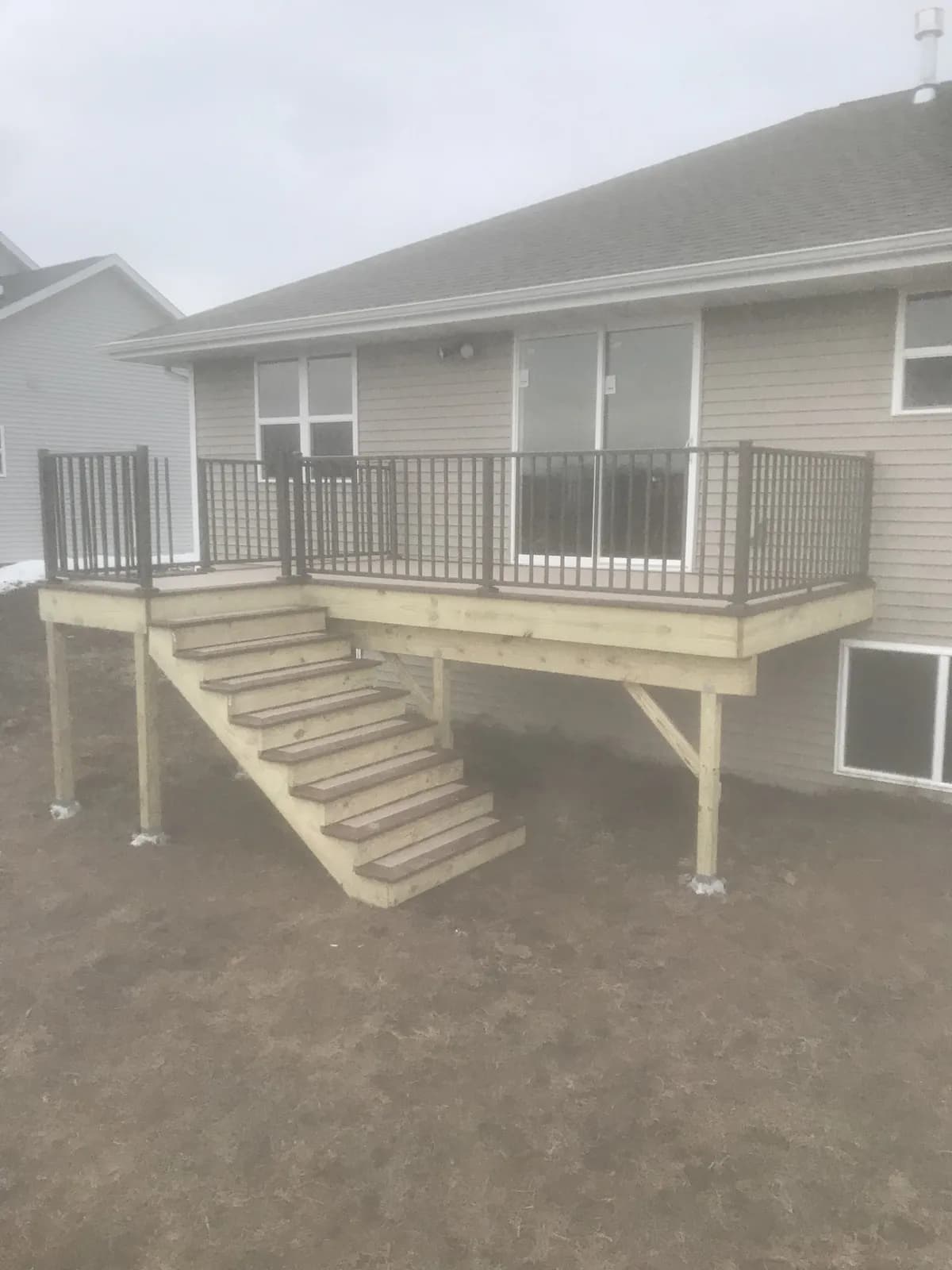
Custom AZEK Deck
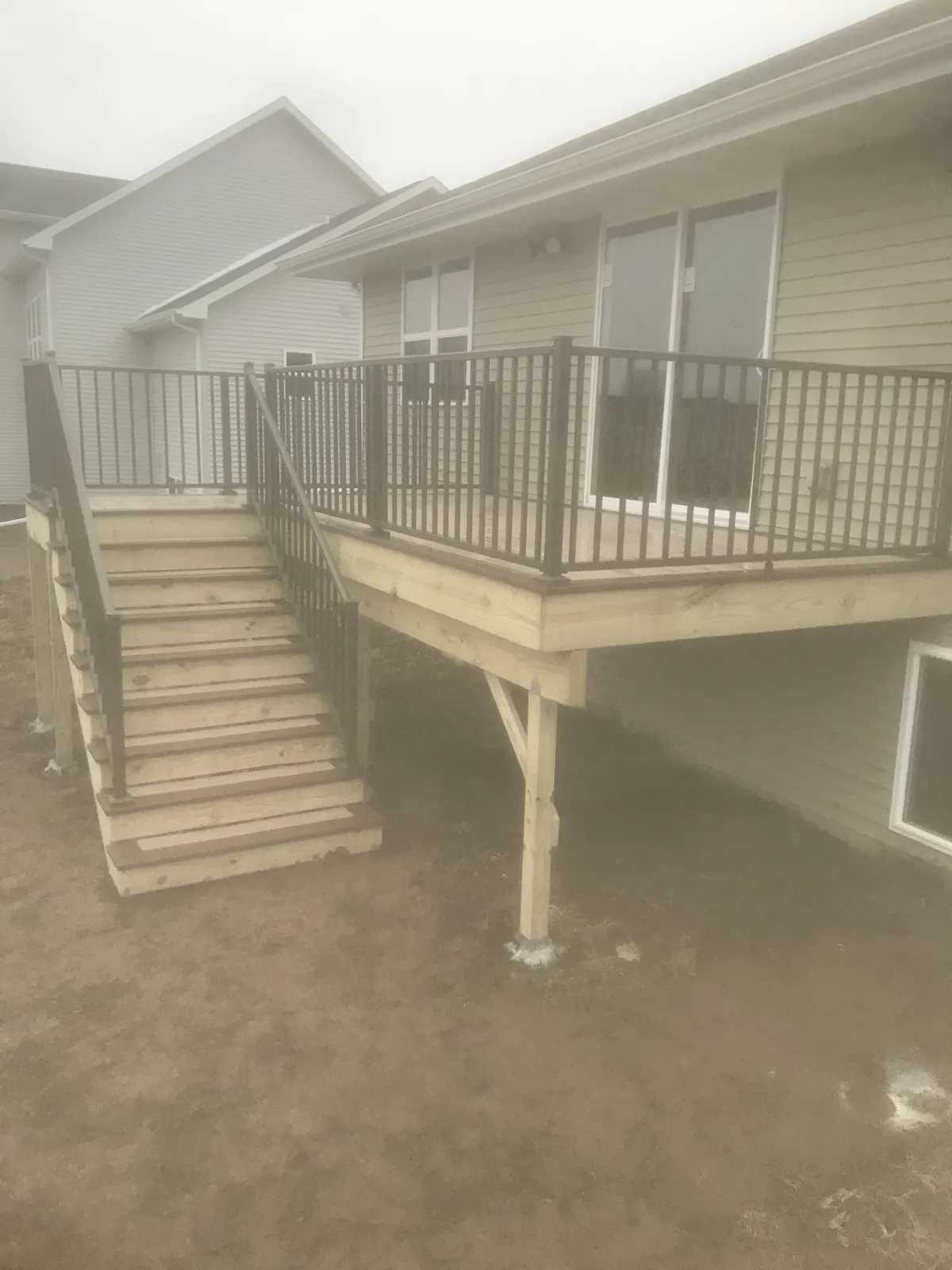
TimberTech Composite Deck
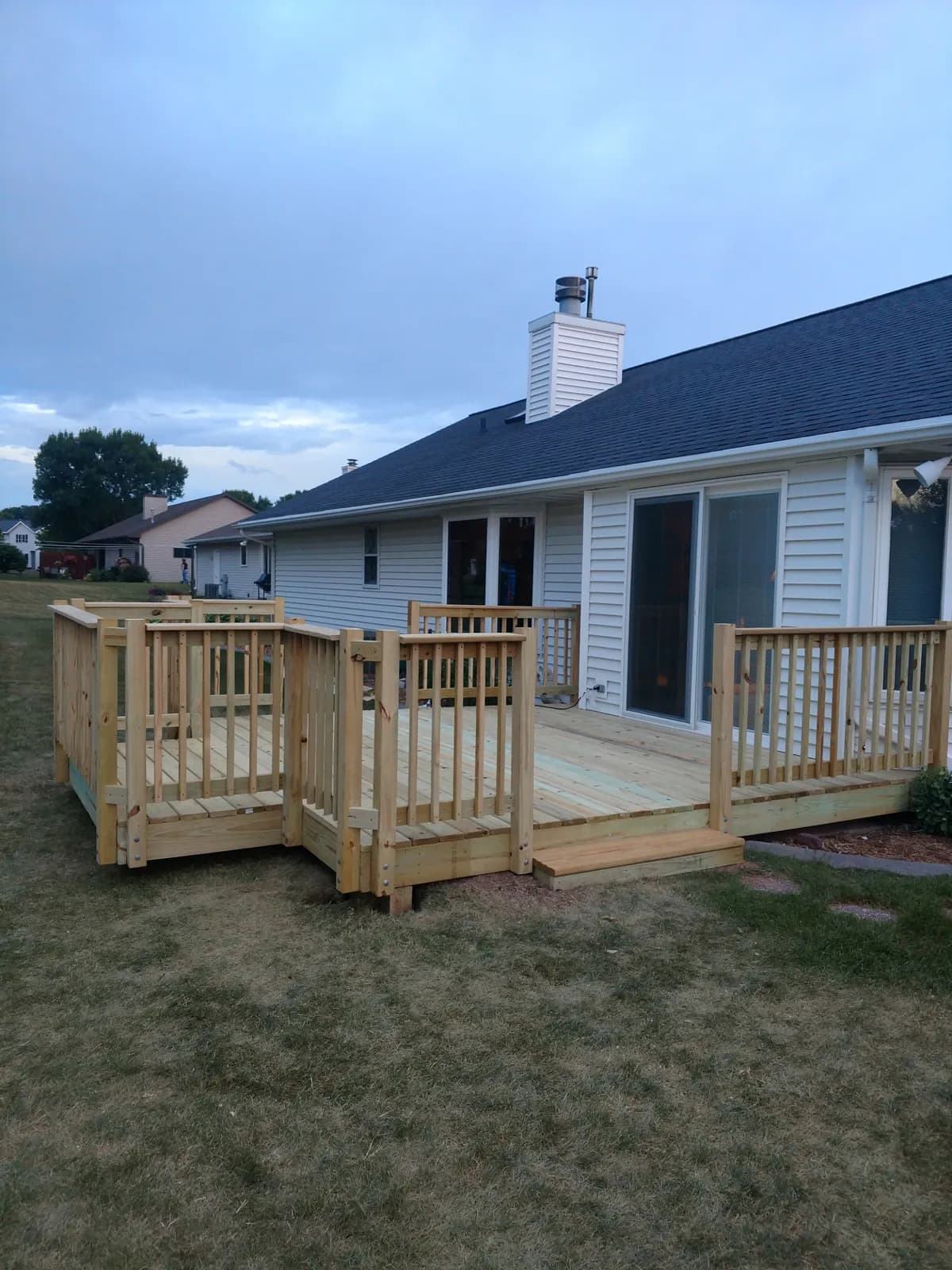
Wood Deck Build
Composite decks, covered structures, and patio roofs engineered for Green Bay's climate and Bay exposure — with ballpark pricing at your design consultation and a full fixed-price proposal within 24 hours.
The east side of Green Bay sits within a mile of the Bay — and that proximity changes everything about how we build decks. Properties in the Astor neighborhood, near Bay Beach Amusement Park, and along the Bay Settlement Road corridor face sustained northwest winds that inland neighborhoods never experience. We've upgraded fastener schedules, increased post sizes, and engineered lateral bracing systems specifically for these Bay-exposed lots. But Green Bay isn't just waterfront: the west side neighborhoods around West Mason Street and Green Isle Park present different challenges entirely — dense clay soils that hold water and create frost heave pressure when temperatures cycle. Allouez homeowners near the Claude Allouez Bridge deal with both Fox River flooding considerations and the aesthetic expectations of one of the metro's most established neighborhoods. In Bellevue, the newer subdivisions have their own dynamics: HOA architectural standards, lots graded for drainage that may not match where you actually want your deck, and newer homes with construction details that require careful ledger attachment. We've built in every corner of Brown County, and we approach each neighborhood knowing what we're likely to encounter before we arrive.
Properties within one mile of the Bay of Green Bay get upgraded stainless steel fasteners and reinforced post-to-beam connections as standard. The salt air and sustained winds demand it — we don't wait for you to ask.
City of Green Bay permits require different documentation than Brown County permits in unincorporated areas. We know both systems and submit the right package to the right office — no rejected applications or wasted time.
The heavy clay soils west of the Fox River hold water and heave under frost pressure. We specify larger diameter footers, proper drainage gravel, and footer depths that account for the soil's lower bearing capacity.
Green Bay's established neighborhoods expect craftsmanship that matches the surrounding homes. We design details — rail profiles, post caps, stair transitions — that complement rather than clash with your home's architecture.
Green Bay's geography creates a patchwork of building conditions that vary dramatically by neighborhood. The east side — from the Astor historic district down through Bay Beach and into the residential areas off East Shore Drive — sits exposed to Bay winds that can sustain 25-40 mph gusts during storms. We engineer deck structures here with wind loads in mind: larger posts, through-bolted connections, and railing systems rated for lateral force. The west side presents the opposite challenge. Neighborhoods around Green Isle Park, along West Mason Street, and out toward Howard feature clay-heavy soils with poor drainage. Footer design here focuses on bearing capacity and frost heave resistance — we typically specify 18-20 inch diameter footers poured to 54 inches rather than the code minimum. Allouez straddles both conditions: properties near the Claude Allouez Bridge may encounter high water table issues during spring melt, while the hillside lots along Webster Avenue offer commanding views but require retaining wall integration and multi-level deck design. Brown County and City of Green Bay permitting operate independently with different requirements — we handle both jurisdictions regularly and know which inspector prefers which documentation format. The Bellevue area's newer subdivisions often have HOA architectural review on top of municipal permits, adding another approval layer we coordinate.
City of Green Bay permits are processed through the Building Inspection Department on South Adams Street and require site plans showing setbacks from property lines. Brown County permits for unincorporated areas go through the Planning and Land Services Department and may have different documentation requirements. We submit to the correct jurisdiction and handle the differences in process.
Yes. Properties within roughly one mile of the Bay face wind exposure and salt air that inland locations don't experience. We upgrade to stainless steel fasteners, increase post sizes, and engineer connections for higher lateral loads on these Bay-exposed properties. The premium for these upgrades is built into our proposals for applicable addresses.
Properties near the Claude Allouez Bridge and along the Fox River corridor may fall within FEMA flood zones. Deck footings in these areas require elevation certificates, and the structure may need to allow water flow rather than obstruct it. We review flood maps during our site assessment and design accordingly — this isn't the place for solid skirting or storage below the deck.
The west side of Green Bay — neighborhoods around West Mason Street, Green Isle Park, and extending toward Howard — features predominantly clay soils. Clay has lower bearing capacity than sand and retains water, creating frost heave pressure. We specify larger diameter footers (18-20 inches typical) and ensure proper drainage gravel beneath each footing to mitigate these conditions.
Yes. Many newer Bellevue developments have architectural review committees that approve exterior modifications before construction. We prepare submittals showing material selections, color choices, and design elevations that satisfy HOA requirements. Once HOA approval is secured, we proceed with the Brown County or City permit process.
The Astor neighborhood in Green Bay falls under standard city zoning with typical 5-foot side setbacks and 25-foot rear setbacks, but the historic character of the area means design review may apply. We've built several decks in Astor and understand how to design structures that complement the early 20th-century architecture prevalent there — material and style choices matter as much as meeting code minimums.
Also Serving Near Green Bay
At your on-site design consultation, we walk your property and deliver ballpark pricing before we leave in most cases. Your full fixed-price proposal — with an exact material list and a build schedule for every phase of construction — arrives within 24 hours. Most contractors in the Northeast Wisconsin take 2–3 weeks to send a quote. We don't.
We walk your property, discuss your vision, and deliver ballpark pricing at the meeting. Full fixed-price proposal within 24 hours.
Book My Design Consultation