Our Work in Appleton
Projects in Appleton
View Full Gallery →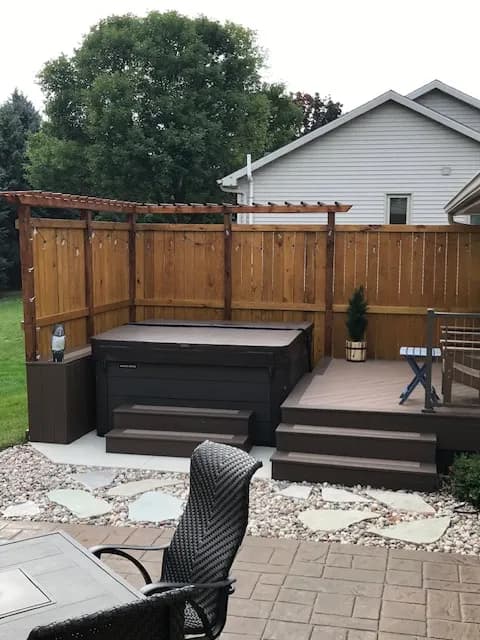
AZEK Deck with Privacy Wall
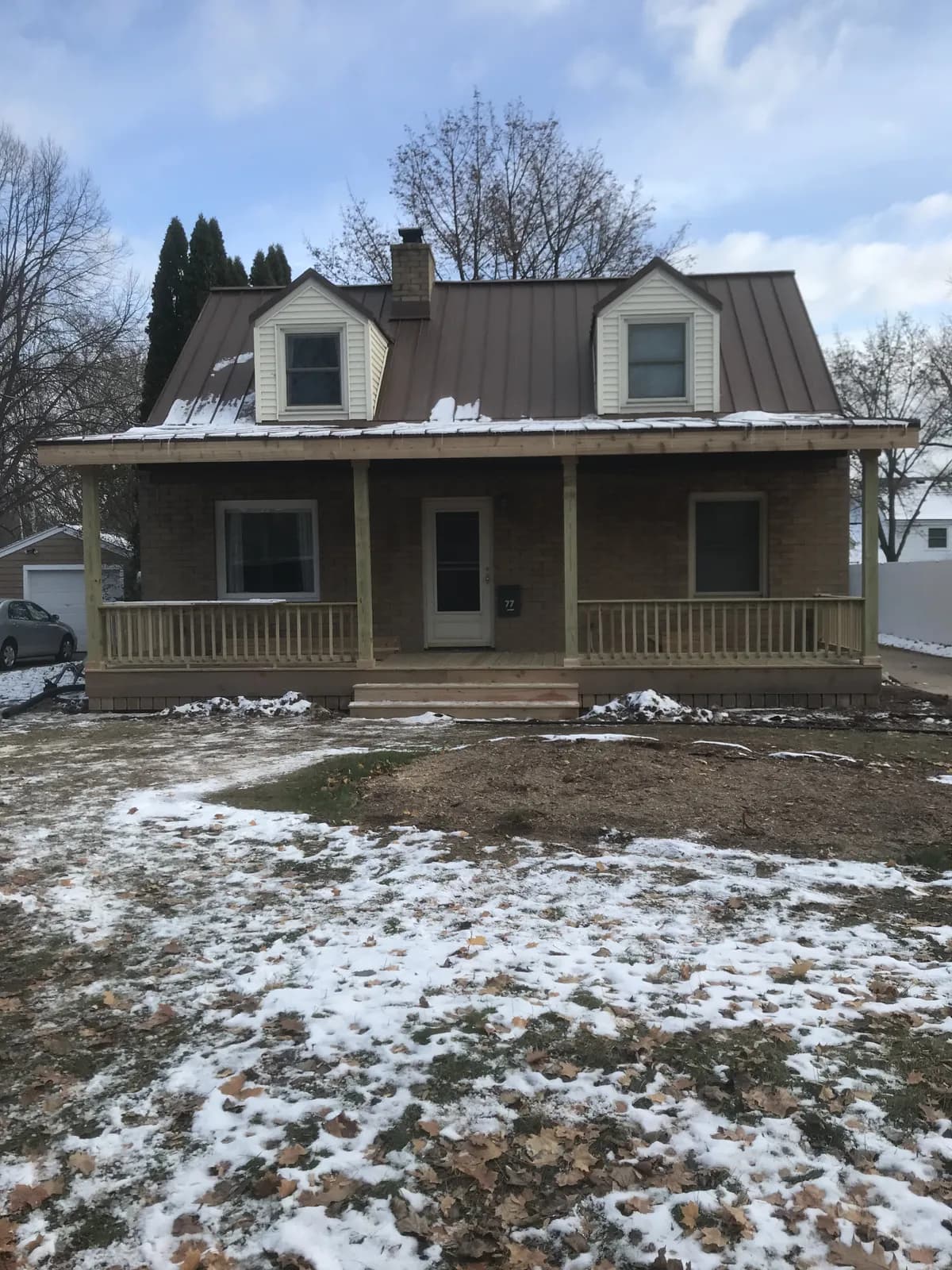
Custom Covered Porch
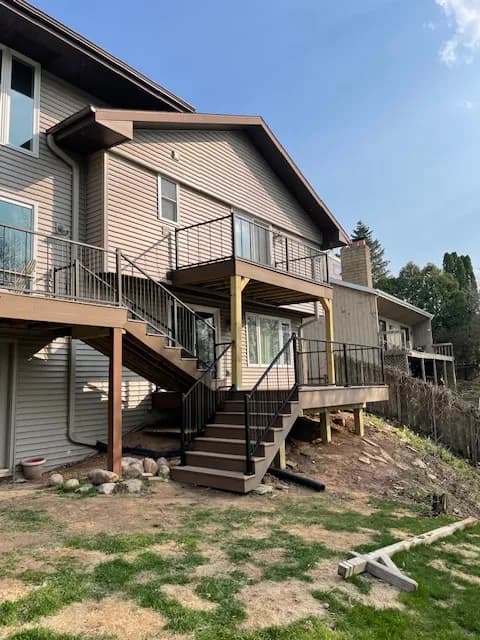
Multi-Level Deck
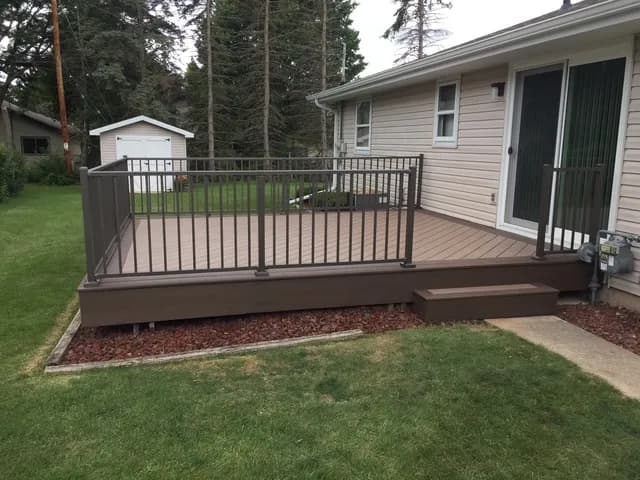
Composite decks, covered structures, and patio roofs designed and built for Appleton homeowners — with ballpark pricing at your design consultation and a full fixed-price proposal within 24 hours.
Building a deck in Appleton means understanding the city's distinct geography — from the dramatic river bluffs along Prospect Avenue to the flat, family-friendly lots in Darboy and Greenville. We've framed walkout decks on 20-foot grade drops overlooking the Fox River Trail, built screened porches for historic homes near Lawrence University where setback requirements get tight, and installed patio roofs on newer construction in the Northland area where clay soils demand oversized footers. The College Avenue corridor presents its own challenges: mature trees, established landscaping, and lots that were subdivided before modern building codes. Memorial Park and the surrounding neighborhoods feature some of the steepest terrain we work on — lots where a standard 12-foot deck becomes a 16-foot elevated structure requiring engineered post connections. Whether you're looking out at the paper mills from a bluff-top property or entertaining in a cul-de-sac in the far west side, we design outdoor spaces that account for exactly where you live.
Appleton's Fox River corridor features grade changes of 15-20 feet on many lots. We engineer multi-level and cantilevered deck systems that turn steep terrain into functional outdoor space with river valley views.
Wisconsin's frost line requires deep foundations. In Appleton's variable soils — sandy near the north side, heavy clay along the river — we match footer diameter and depth to your specific soil bearing capacity.
Lawrence University area homes often fall under additional design review. We prepare documentation that satisfies both city building inspectors and historic preservation requirements.
Appleton requires PE-stamped structural drawings for decks over 200 square feet or 30 inches above grade. We handle this as standard scope — no surprise engineering fees after you've signed.
Appleton's building landscape divides into distinct zones that affect every deck project differently. The downtown and College Avenue corridor features compact lots with minimal side yards — many built in the 1920s-1950s when setback requirements were looser. Here, we frequently design decks that maximize usable space while respecting the 5-foot side setback and 25-foot rear setback the city now requires. Moving toward the Northland area and Darboy, lots open up but soil conditions change: the clay-heavy ground common near Highway 41 holds water and requires careful grading around deck footings to prevent frost heave. Properties along the Fox River Trail corridor — particularly those off Oneida Street and near Lutz Park — present the most dramatic building conditions: 15-20 foot elevation changes from house to property line. We've built dozens of elevated and multi-level structures on these bluff lots, engineering post-to-beam connections that handle both the vertical loads and the lateral forces from wind exposure at elevation. The City of Appleton Building Inspection Department requires stamped structural plans for most deck projects, and their inspectors are thorough — we submit complete documentation including soil assumptions, load calculations, and connection details because partial plans get rejected.
The City of Appleton requires 5-foot side setbacks and 25-foot rear setbacks for deck structures in most residential zones. Properties in the R-1 district near Lawrence University may have additional restrictions. Corner lots have unique front-yard considerations on both street-facing sides. We verify setback requirements during our initial site review.
Yes, the City of Appleton requires PE-stamped structural drawings for decks exceeding 200 square feet or elevated more than 30 inches above grade. We include stamped engineering as part of our standard project scope — the cost is built into your proposal, not added later as a change order.
River bluff properties with 15-20 foot grade changes require engineered multi-level or elevated deck systems. We use oversized posts (6x6 minimum at these heights), engineer-specified post-to-beam connections, and lateral bracing to handle both vertical loads and wind exposure. Footer placement accounts for the slope — we don't just dig deeper on the downhill side; we engineer the foundation as a complete system.
Soil varies significantly across Appleton. The Northland area and west side tend toward clay-heavy soils with lower bearing capacity — we typically specify 18-inch diameter footers here. Areas closer to the river and north side have sandier soil with better drainage but may require deeper footings to reach stable ground. We assess soil conditions during our site review and adjust foundation design accordingly.
Yes, though properties in Appleton's historic districts may require design review beyond standard building permits. We prepare documentation showing how the deck design complements the home's architectural character, select materials and railing styles appropriate to the era, and coordinate with both building inspection and any applicable historic review boards.
Wisconsin code requires footings extend below the 48-inch frost line. In Appleton, we typically pour to 54 inches to provide margin, especially in clay soils where frost heave pressure is more pronounced. The footer diameter depends on soil bearing capacity and the tributary load each post carries — calculations we include in the stamped engineering plans.
Also Serving Near Appleton
At your on-site design consultation, we walk your property and deliver ballpark pricing before we leave in most cases. Your full fixed-price proposal — with an exact material list and a build schedule for every phase of construction — arrives within 24 hours. Most contractors in the Fox Valley take 2–3 weeks to send a quote. We don't.
We walk your property, discuss your vision, and deliver ballpark pricing at the meeting. Full fixed-price proposal within 24 hours.
Book My Design Consultation